
Dental implantation: from material breakthrough to clinical standards, unlocking the repair code for the human "third set of teeth"
The rapid development of technology has brought unprecedented convenience to humanity. Exploring the mysteries of the universe also unlocks the code for human health. With the increase of health knowledge and awareness of health care, people's attention to the oral cavity is also increasing. There are only two sets of teeth in a person's life. If the second set of teeth falls out, is there any way to restore them? Experts from Changsha Stomatological Hospital stated that dental implantation is one of the most ideal restoration methods.
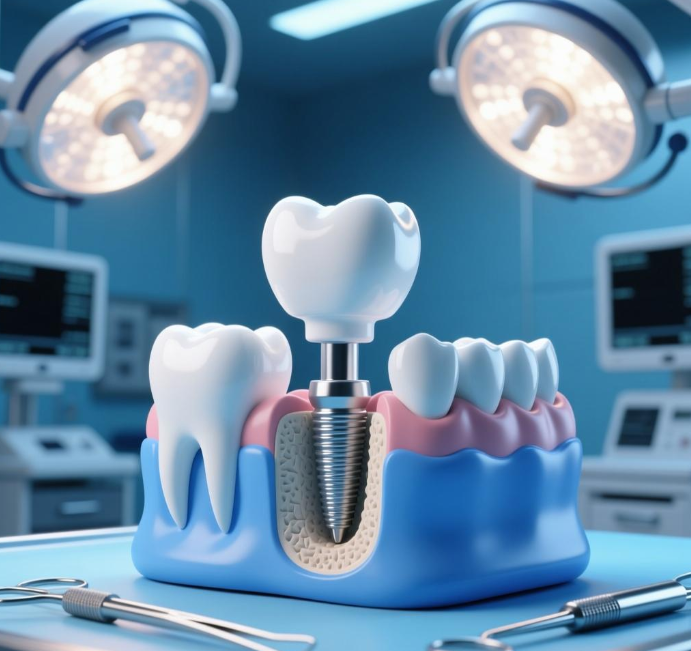
Dental implantation is a type of oral restoration completed on the basis of dental implant support and fixation. The development of modern dental implants began in the 1930s, thanks to the emergence of a group of high-strength, corrosion-resistant, and easily machinable metal materials such as cobalt chromium alloy and titanium metal. Dental implants can be divided into metal implants, ceramic implants, carbon implants, polymer implants, and composite implants based on the materials used.
Modern implant surgery has become quite standardized, divided into three categories based on the structure of the implant, healing method, surgical purpose, and surgical time.
One stage planting and two-stage planting. The one-stage implant has a connected implant and abutment, which immediately bears weight after implantation into the alveolar bone. This implant has a simple structure and poor long-term effects, and is currently rarely used. The two-stage implant consists of a split implant and abutment, which allows for immediate or delayed loading.
Submerged planting and non submerged planting. Submerged implantation refers to the complete embedding of the implant in soft tissue during the healing period, isolated from the oral environment, and requiring a secondary surgery to install the healing abutment and complete the implantation of the implant. Non invasive implants are connected to the oral environment during the healing period, with the difference being the depth of implantation.
Delayed planting and immediate planting. Delayed implantation is performed after the tooth extraction wound has fully healed, usually 3 months after tooth extraction. This technology is mature, easy to achieve good initial stability, and has a high success rate. Immediate implantation refers to the immediate implantation of dental implants after tooth extraction, which has the characteristics of short tooth loss time, less bone resorption, and good aesthetic effect.
The design of oral implants is a tedious and complex process. Oral examination requires determining the location, quantity, gap size, and bite relationship of missing teeth, as well as evaluating the available bone mass, bone density, and quality and quantity of soft tissue. In addition, the patient's condition outside the mouth includes whether the patient's facial shape is symmetrical, the degree and shape of the opening, the range of motion of the temporomandibular joint, the clicking and murmuring of the temporomandibular joint, and the function of the chewing muscles. In clinical examinations, imaging examinations such as periapical radiographs, curved body tomography, lateral cephalometric radiographs, CT scans, etc. are required. Therefore, choosing a medical institution with rich planting experience, complete inspection equipment, and comprehensive equipment disinfection is a comprehensive consideration for dental implant patients.